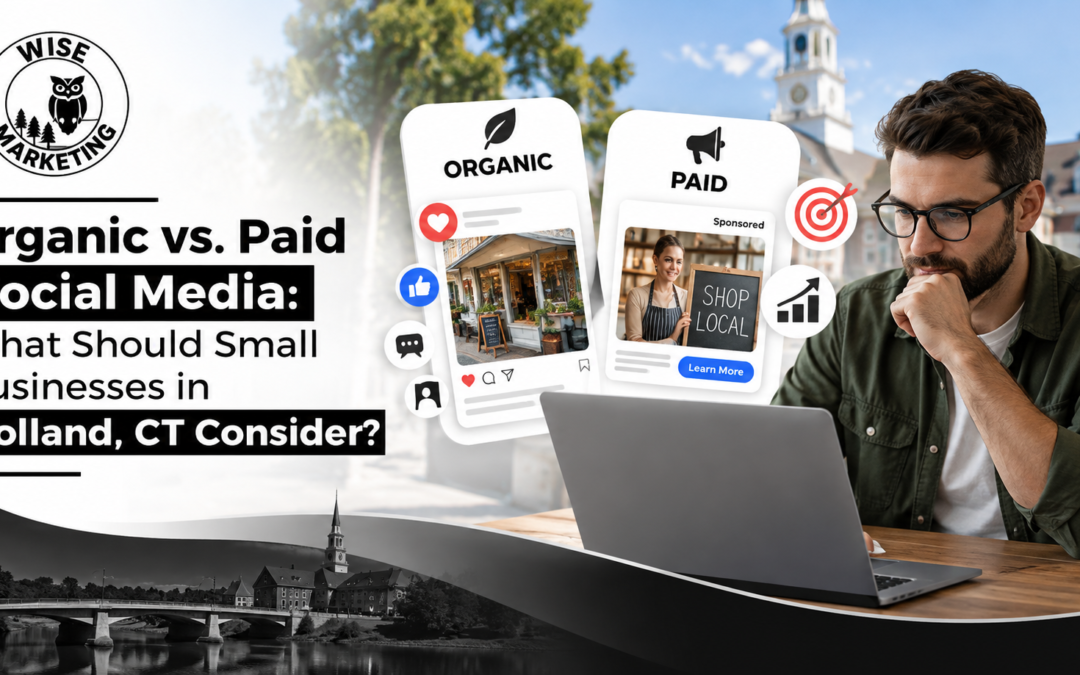
Social media can be an important part of how a small business stays connected with customers. However, simply having a Facebook or Instagram page does not automatically bring attention, inquiries, or sales. Businesses generally have two main ways to reach people on social platforms: organic social media and paid social media.
Understanding the difference can help small businesses in Tolland, CT decide where to put their time, effort, and marketing budget. In many cases, organic and paid social can work together rather than being treated as completely separate strategies.
What Is Organic Social Media?
Organic social media refers to content that a business publishes without paying the platform to distribute it as an advertisement. This can include regular posts, photos, videos, Reels, Stories, educational content, customer updates, and conversations with followers.
The purpose of organic content is often to build familiarity and maintain relationships with an existing audience. It can also help a business show its personality, answer common questions, demonstrate knowledge, and stay visible within its community.
For a small business in Tolland, this could mean sharing useful information about its services, introducing team members, showing behind-the-scenes work, answering customer questions, or discussing topics that matter to local customers.
What Is Paid Social Media?
Paid social media involves paying a platform to distribute advertisements or sponsored content to selected audiences. Unlike an organic post, a paid campaign can be designed to reach people based on factors such as location, interests, demographics, or other available targeting options.
Paid advertising can be useful when a business wants to promote a specific offer, generate website traffic, introduce a service, or reach people beyond its existing followers.
For example, a Tolland business could create an advertisement aimed at people in a specific geographic area rather than waiting for an organic post to reach those potential customers.
The Main Difference Between Organic and Paid
The simplest difference is distribution.
Organic content relies on the platform’s normal distribution and the audience a business has developed. Paid content uses an advertising budget to place the message in front of a selected audience.
Organic social media is often useful for building a long-term relationship with an audience. Paid social can provide an additional way to reach targeted people when a business has a particular marketing objective.
Wise Marketing describes its social media approach as combining organic and paid solutions, rather than treating the two strategies as completely separate activities.
When Should a Small Business Focus on Organic Social?
Organic social media can be particularly useful when the goal is to build trust and community. A business can use its regular content to explain what it does and give potential customers a reason to keep following the brand.
Educational posts can be especially useful. Instead of constantly promoting a product or service, a company can answer questions, share helpful tips, explain common problems, or provide practical information.
Wise Marketing’s recent guidance for Coventry businesses similarly emphasizes that social content should provide value rather than becoming overly promotional.
When Can Paid Social Be Useful?
Paid social may make sense when a business has a specific audience or campaign objective. For example, a company may want to promote a seasonal offer, drive traffic to a particular landing page, announce a new service, or reach people who have not previously interacted with the business.
One advantage of paid campaigns is that businesses can establish targeting parameters rather than relying entirely on their existing followers.
However, paying for advertising does not automatically make the underlying message effective. A poorly planned advertisement can still fail to attract attention or generate useful action.
Why Content Quality Still Matters
Whether a post is organic or paid, the content itself matters. A business needs to understand who it is trying to reach and what that audience actually wants to see.
A useful social media strategy might include educational posts, short videos, customer questions, behind-the-scenes content, testimonials, service information, and promotional messages.
Using different formats can also help prevent a social media page from becoming repetitive. Wise Marketing recommends varying content while keeping the overall brand recognizable.
Should You Choose One or Use Both?
For many small businesses, the question does not have to be organic or paid. The two approaches can serve different purposes.
Organic content can help maintain the brand’s social presence and build relationships with followers. Paid campaigns can provide additional reach for specific promotions, services, or audiences.
A business might publish educational content organically and then use paid advertising when it has a particular offer or campaign it wants to put in front of a larger or more specific audience.
The right balance depends on the company’s goals, audience, available resources, and type of business.
What Should Tolland Businesses Measure?
Likes and follower numbers can provide some useful information, but they do not tell the entire story. Businesses should consider metrics that connect with their actual goals.
Depending on the campaign, this could include reach, comments, shares, saves, profile visits, website clicks, inquiries, leads, or conversions.
Looking at these results over time can help a business understand which types of content attract attention and which activities contribute to meaningful customer actions.
Creating a Practical Social Media Strategy
A small business does not necessarily need to spend heavily on advertising or publish constantly to have a useful social media presence. The more important starting point is understanding the audience and establishing a clear purpose for each type of content.
Businesses that need help planning and managing their social presence can explore professional social media management services in Coventry to understand how ongoing social media planning can fit into a broader marketing strategy.
Wise Marketing also provides social media management, content creation, and digital marketing services for businesses that want their social activity connected with other marketing efforts.
Final Thoughts
Organic and paid social media are not necessarily competing choices. They can work together when each has a clear purpose.
For a small business in Tolland, CT, organic content can help build familiarity, answer customer questions, and maintain relationships, while paid campaigns can provide targeted reach for specific marketing goals.
The most useful strategy is usually the one that matches the business’s audience, resources, and objectives. Instead of simply posting more or spending more, businesses should focus on creating relevant content, reaching the right people, and measuring whether their social media activity is supporting their larger business goals.