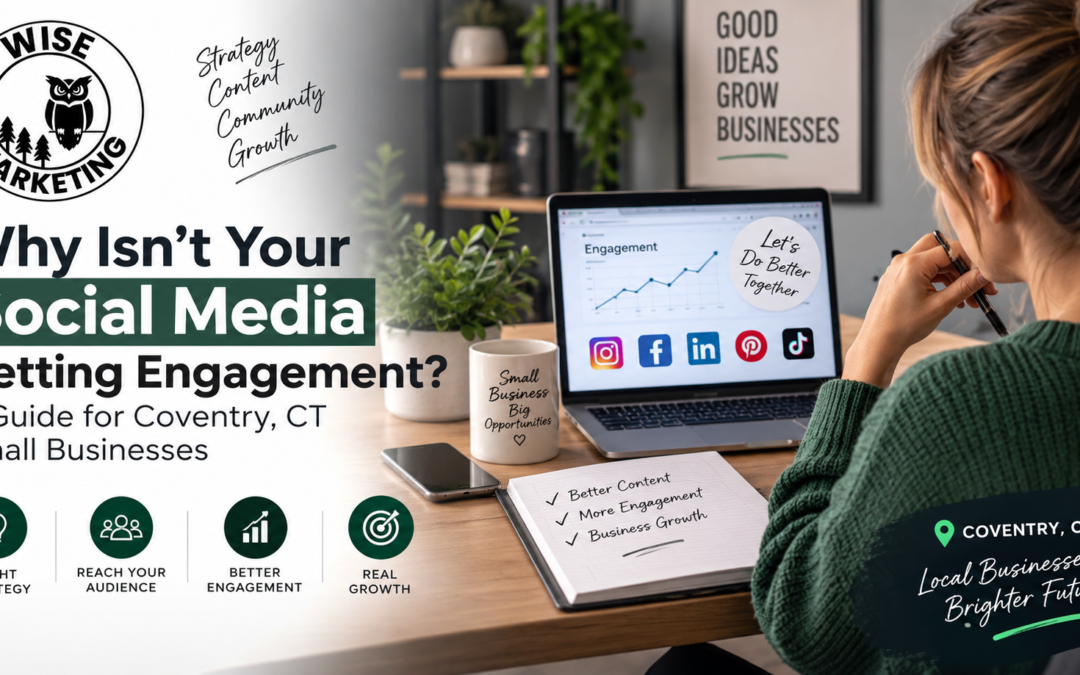
Posting regularly on social media can feel like a lot of work. You create graphics, write captions, share updates, and try to stay active, but the likes, comments, inquiries, and website visits still do not improve. For many small businesses, this creates an obvious question: Why isn’t social media working even though we are posting consistently?
The problem is that consistency alone does not create engagement. Successful social media requires relevant content, a clear audience, good communication, and an understanding of what people actually want from a business online. Here are seven common reasons your social media activity may not be producing the results you expected.
1. You Are Posting Without a Clear Strategy
Posting simply because “we need something on Instagram today” is very different from following a content strategy.
Every post should have a purpose. Some content might educate your audience, while other posts build trust, encourage conversation, demonstrate expertise, answer questions, or introduce a service.
Before creating content, decide who you want to reach and what you want them to do. Businesses can also look at agencies such as Wise Marketing to understand how social media fits into a broader digital marketing approach rather than treating each post as an isolated activity.
2. Your Content Is Too Promotional
Imagine following a business that says “Buy Now,” “Book Today,” or “Contact Us” in almost every post. It quickly starts to feel like advertising rather than social media.
People generally follow businesses because they expect something useful, interesting, entertaining, or relevant in return.
A roofing company could explain common signs of roof damage. A restaurant could show behind-the-scenes preparation. A financial professional might simplify a frequently misunderstood topic. Educational and relatable content can provide value before asking the audience to make a purchase.
Promotion is still important, but it should not be your entire content strategy.
3. You Are Talking to Everyone
Trying to create content for everyone often results in content that feels relevant to no one.
Think carefully about your ideal audience. What questions do they ask? What problems do they face? What information would make their lives easier? What might prevent them from buying your product or service?
A local business, for example, may benefit from content that references its community, local needs, seasonal concerns, or frequently asked customer questions.
The more clearly you understand your audience, the easier it becomes to create posts that feel as though they were written specifically for them.
4. Your Content Looks the Same Every Day
Consistency in branding is useful. Repetition in content is not.
If every post has the same layout, message, format, and call to action, followers may begin scrolling past without noticing it.
Try varying your content while keeping your overall brand recognizable. You might combine educational posts, short-form videos, customer questions, behind-the-scenes content, carousels, polls, tips, testimonials, and service-related posts.
The goal is not to chase every trend. It is to give your audience different reasons to stop and pay attention.
5. You Are Publishing but Not Being Social
The word “social” matters.
Social media is designed for communication, yet many businesses publish a post and disappear. They do not respond to comments, answer messages promptly, participate in conversations, or interact with their community.
Engagement works in both directions. If someone takes time to ask a question or leave a thoughtful comment, responding can help strengthen that relationship.
Businesses that struggle to manage planning, publishing, engagement, and performance alongside everyday operations may consider professional social media management services in Coventry to create a more organized and consistent approach.
6. You Are Using the Same Approach on Every Platform
Copying one post and publishing it everywhere may save time, but different platforms have different audiences and content behaviors.
A professional LinkedIn post may need a different presentation from an Instagram Reel. Pinterest users often search for ideas and inspiration, while Facebook may work well for community-focused conversations depending on the audience.
You do not necessarily need completely different content for every platform. Instead, learn how to repurpose one core idea.
For example, one blog article could become a LinkedIn post, Instagram carousel, short video, Facebook discussion, and several Pinterest graphics. The main message remains consistent while the format changes.
7. You Are Measuring the Wrong Results
Likes can be encouraging, but they do not tell the whole story.
A post with fewer likes might generate several website visits or qualified inquiries. Another post could receive plenty of reactions but produce no meaningful business action.
Pay attention to metrics that connect with your goals. These may include reach, saves, shares, comments, profile visits, website clicks, leads, inquiries, or conversions.
Reviewing performance also helps identify patterns. If educational videos consistently outperform promotional graphics, that information should influence your future content strategy.
Final Thoughts
Posting consistently is useful, but consistency without strategy can become repetitive activity rather than effective marketing.
If your social media is not generating engagement, avoid assuming that you simply need to post more. Instead, review what you are posting, who it is designed for, how you communicate with followers, which platforms you use, and what your performance data is telling you.
Strong social media management is not about being everywhere or publishing constantly. It is about creating the right content for the right audience with a clear purpose. When businesses shift their focus from simply filling a content calendar to genuinely helping and engaging their audience, social media has a much better chance of supporting long-term brand awareness and business growth.